Tea, Tyranny, and the Women who Fought Back
For Women’s History Month this year, I gave a talk on how women used food to demonstrate their political power during the American Revolution. Most of my research centers on the late nineteenth and early twentieth centuries, so it was a pleasure to take a deep dive into an earlier era. We can still see connections today between how Revolutionary women leveraged food for a political message, and how food is still a form of political expression today.
Food as Political Language
Food is a form of national identity and political expression. As historian Nancy Siegel writes in her article “Cooking Up American Politics,” the “domestic language of food was easily understood.” Food provides easy metaphors that everyone understands. The phrase “you are what you eat” is ideological as much as physical. Anyone who was alive in the early 2000s may remember America’s brief dalliance with “freedom fries” when France opposed the American invasion of Iraq, for example. That simple phrase was shorthand for complex views of a much larger situation. In the same way, tea became shorthand for American’s views on British rule and American liberty.
Tea in the Colonies
The American Revolution was tied with food from its beginnings The British began imposing taxes on imported goods long before 1773 Tea Act which led to the infamous Boston Tea Party. Taxation started after the Seven Years’ War with a tax on sugar in 1764, followed by taxes on tea and other imported goods. While the 1765 Stamp Act and the subsequent 1767 Townshend Duties taxed a wide array of goods and documents, tea became a key focus because it was part of daily colonial life.
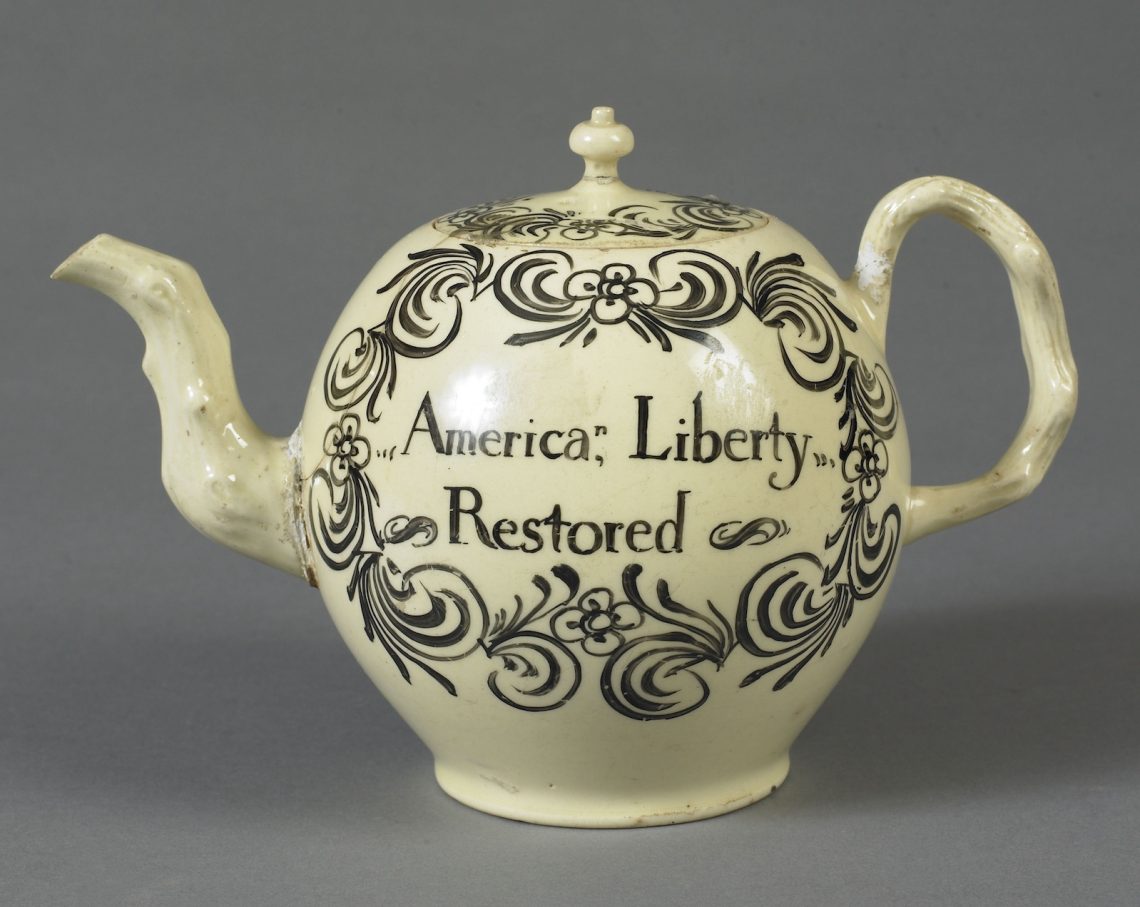
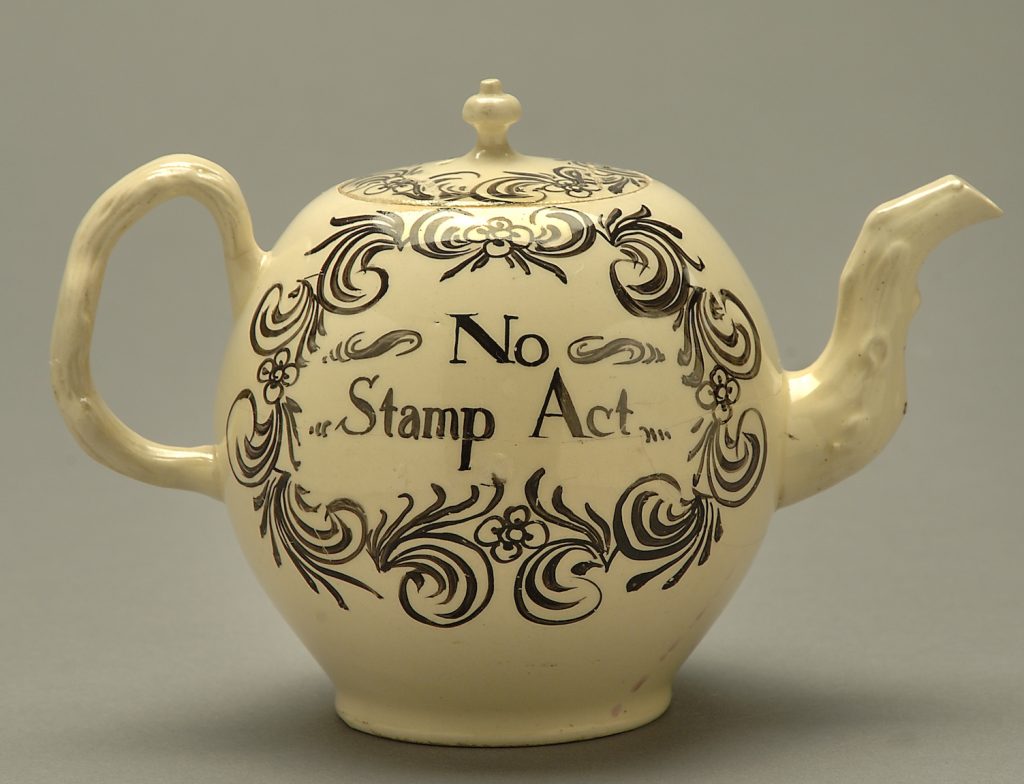
Tea was introduced into the colonies in the 1670s, and by the 1700s, it was a daily necessity. Drinking tea helped colonists signify their “Britishness,” a quality American colonists greatly valued. Tea drinking extended beyond the beverage itself into material culture. Tea pots, teacups, strainers, sugar bowls, and other paraphernalia signified a person’s social status. When the Stamp Act was passed in 1766, Americans and Britons could even protest with teapots printed with the slogan “No Stamp Tax.”
Women lead Protests
Taxes on tea first went into effect in 1767 with the passage of the Townshend Duties, which collected revenue as tea entered colonial ports. Americans protested, as they had with earlier attempts at taxation. By taxing goods like tea, the British brought issues of liberty and freedom directly into people’s homes, the domain of women Women read political pamphlet, formed clubs to discuss current issues, and led boycotting efforts. They served tea substitutes and signed pledges to abstain from tea.
A poem published in the Boston Post–Boy & Advertiser on November 16, 1767, appealed specifically to women’s virtue and attractiveness.
Throw aside your Bohea and your Green Hyson Tea,*
And all things with a new fashion duty;
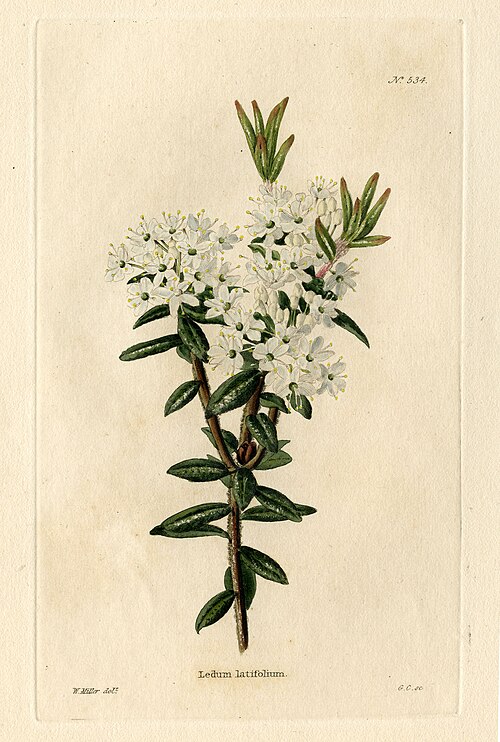
Procure a good store of choice Labradore**
For there’ll soon be enough here to suit ye;
These do without fear, and to all you’ll appear
Fair, charming, true, lovely; and clever;
Through the times remain darkish, young men may be sparkish,
And love you much stronger than ever.
*Bohea and Green Hyson were types of imported tea.**Labradore was a tea substitute made from a variety of rhododendron native to New England.
The tea-drinking habit was deeply engrained in American life and culture, and it was difficult to give up. Historian Benjamin Larabee writes in his seminal work The Boston Tea Party that, “persuading colonial housewives to change their tea-drinking habits or to abandon them altogether proved as difficult as growing the Chinese tea plant in America.” This is a very human reaction. Changing habits is not easy. I imagine that many women had good intentions, even if they failed to fully give up tea. Still, momentum against tea grew. More groups of patriotic women across the country began to boycott tea.
From Boycotts to Food Riots
Protests against tea intensified after the passage of the Tea Act in 1773 when the British granted the East India Company a monopoly to sell tea directly to American colonists, bypassing the usual auction process in London. While this made the company’s tea cheaper, colonists worried that a monopoly on one product would pave the way for future monopolies, and taxes, on others. When the first ships docked in Boston Harbor in December 1773, patriots dumped the cargo into the water in what was then called “the destruction of the tea.” Britain responded with the Coercive Acts (known in America as the “Intolerable Acts”) in 1774, closing the port of Boston and dissolving the Massachusetts government. Colonial protest renewed with fresh intensity.
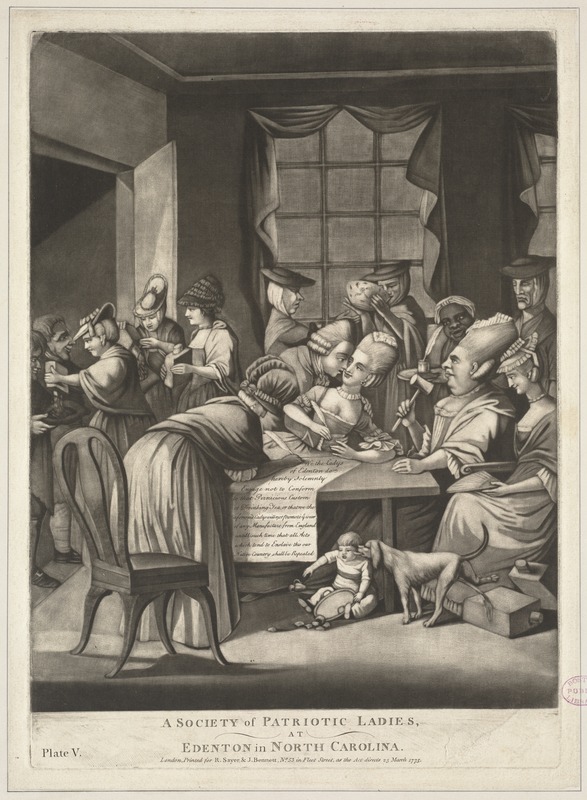
By 1774, nearly every colony had protested against the Tea Act, including a group of fifty-one women in Edenton, North Carolina, who pledged to avoid “that Pernicious Custom of Drinking Tea” until the tax was repealed. The declaration attracted enough attention that British satirists took aim at them. The print circulated in Britain depicted the women as crude caricatures, mocking their virtue and their fitness as mothers. A slave woman in the background challenges the idea that the women are fighting for liberty. It wasn’t a flattering image, but it was a revealing one. British commentators were satirizing American women right alongside American men. Women’s political actions had become prominent enough to be worth attacking.
Forming patriotic organizations was new territory for women. Beyond the lack of organizations, most women also lacked legal or political standing. Progressive Era historian Alice Morse Earle notes that other than a few church-affiliated groups, “there were not, at that time, the associations of women for concerted charitable and philanthropic work. . . . the very thought of a woman’s society for any other than religious purposes must have been in itself revolutionary.” Yet this is exactly what women did to defend their homes and families. As historian Barbara Clark Smith writes, “possibilities for political action that resistance and revolution opened for women” led them to become “social and economic actors within the household, neighborhood, and marketplace.”
Women continued to participate in protests throughout the Revolution. Having found their political voice, they turned to protesting food shortages and price gouging. According to Smith, over thirty food riots occurred between 1776-1779. Rioters specifically targeted grocers and traders who they suspected of profiteering. In New York City, for example, a committee of women led a march into city alderman Jacobus Lefferts’s grocery store to seize a shipment of tea. They told him they would pay “the continental price” authorized by the Continental Congress (6s. per pound). When he refused, they appointed their own “clerk” and “weigher,” sold the tea at that price, and sent the proceeds to the Revolutionary county committee.
Legacy
The Revolution gave women a voice and a template for collective political action. They realized that “the personal is political,” long before modern feminists began using that phrase. What we choose to eat can say a lot about our social and political values. While individuals can, and do, make a difference, we accomplish more when we work together. Women continued to form associations after the Revolution to fight for a variety of causes such as abolition, suffrage, and many others. Food factored into those movements too. Abolitionists refused to purchase food and other goods produced by slaves. Suffragists sold cookbooks to raise funds. Next time you make a deliberate choice about what to put in your cart, or what to avoid, think of the women from the past who made similar choices.


