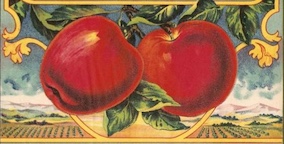
Happy 250th America! 250 years of Apples and Food Innovations
A very happy 4th of July to everyone! This year, 4th of July is an extra special milestone. It’s been a time to reflect on how American has changed – and for me, that means thinking about apples and food innovations. But before that, check out this Buster Brown coloring book advertisement my mom saved from the bicentennial in 1976.
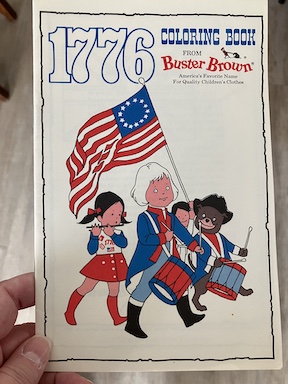
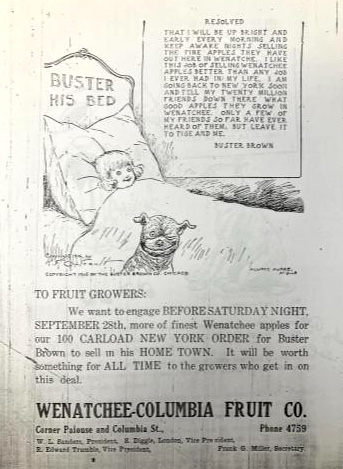
Richard Outcault created the popular Buster Brown character in 1902. He licensed it to advertise hundreds of products, most famously shoes for the Brown Shoe Company. As I talk about in my book, the Wenatchee-Columbia Fruit Co. also used Buster Brown in an early advertising campaign for Wenatchee apples. As you can see, Buster had gotten a bit of a make-over by 1976.
250 Years of Food Innovation
American food has changed a lot since 1776. Earlier this week, the New York Times, in collaboration with several prominent food historians, posted a list of the top 25 food innovations that have changed America since 1776. Many of the items on the list were technological innovations that changed the way food is grown, distributed, and consumed. The mechanical reaper, for example, allowed food to be grown at scale. The refrigerated rail car allowed food to be transported long distances. Home economists changed the conversation about what should be on our plates, and the self-serve grocery store allowed Americans to help themselves. Together, these innovations revolutionized American foodways.
The Apple in 1776
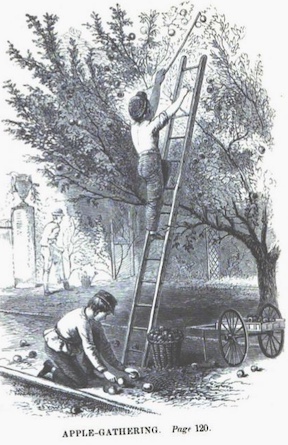
In my book, The Washington Apple: Orchards and the Development of Industrial Agriculture, I talk about how these innovations impacted the apple. In 1776, most Americans lived on farms, and most farms had apple trees. Those trees were an important food source. Americans used apples in a variety of ways. People ate them fresh, dried, and fermented them into cider or vinegar. Farmers turned their hogs loose in orchards to fatten up on fallen fruit before the slaughter. Trees represented home, and in the early years of the American Republic, settlers planted trees to prove their land claims.
From Farm to Grocery Store – What Comes Next?
Things have changed a lot in the last 250 years. Most Americans live in urban areas and have since the 1920s. We buy our apples at grocery stores. Unlike people in 1776, we don’t have to wait for apples to be in season – we can eat them year round thanks to controlled atmosphere storage technology. A hundred years ago, refrigerated railcars and cold storage warehouses enabled Washington growers to transport their apples across the country. That same technology extended to the entire American food system, giving Americans greater variety and fresher options.
That’s not to say that our current system is perfect. New innovations are not without their problems, and food systems of every era have their faults. One thing that does become clear from studying the past is that Americans are creative. We invented sliced bread, after all. While I won’t be around to see most of it, I’m excited to see what the next 250 years brings for American food.


